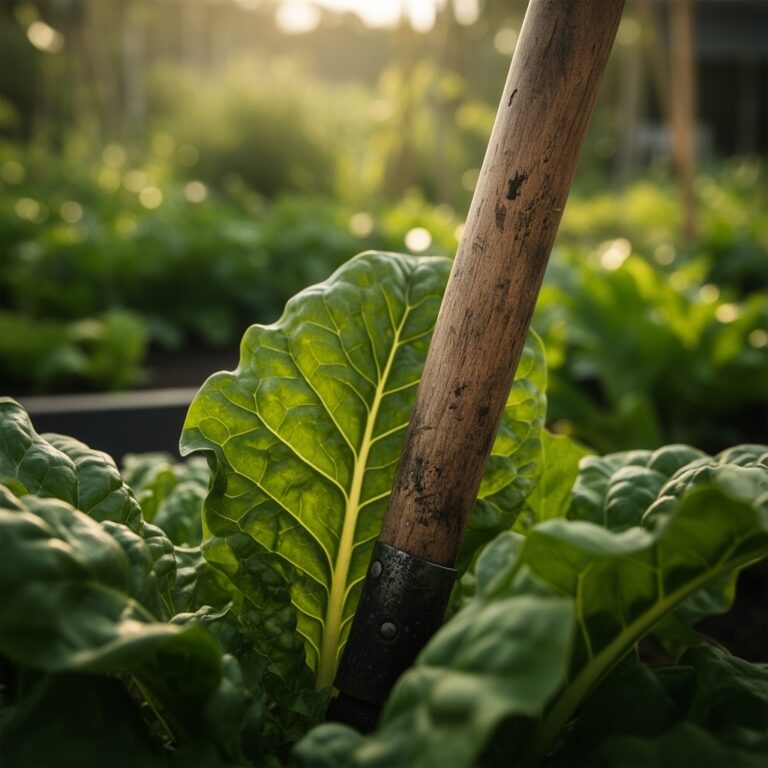
9 Tips to Use a Rake for Final Bed and Path Prep
The rake's tines bite into loose soil and pull a smooth, level surface across the bed. Each stroke consolidates the top half-inch while revealing hidden clods, glass shards, or root masses that sabotage germination. Using a rake for garden prep transforms irregular, excavated ground into a firm seedbed with uniform moisture-wicking properties and optimal seed-to-soil contact. The difference between a raked bed and an untouched one shows in emergence rates within seven days.
Materials
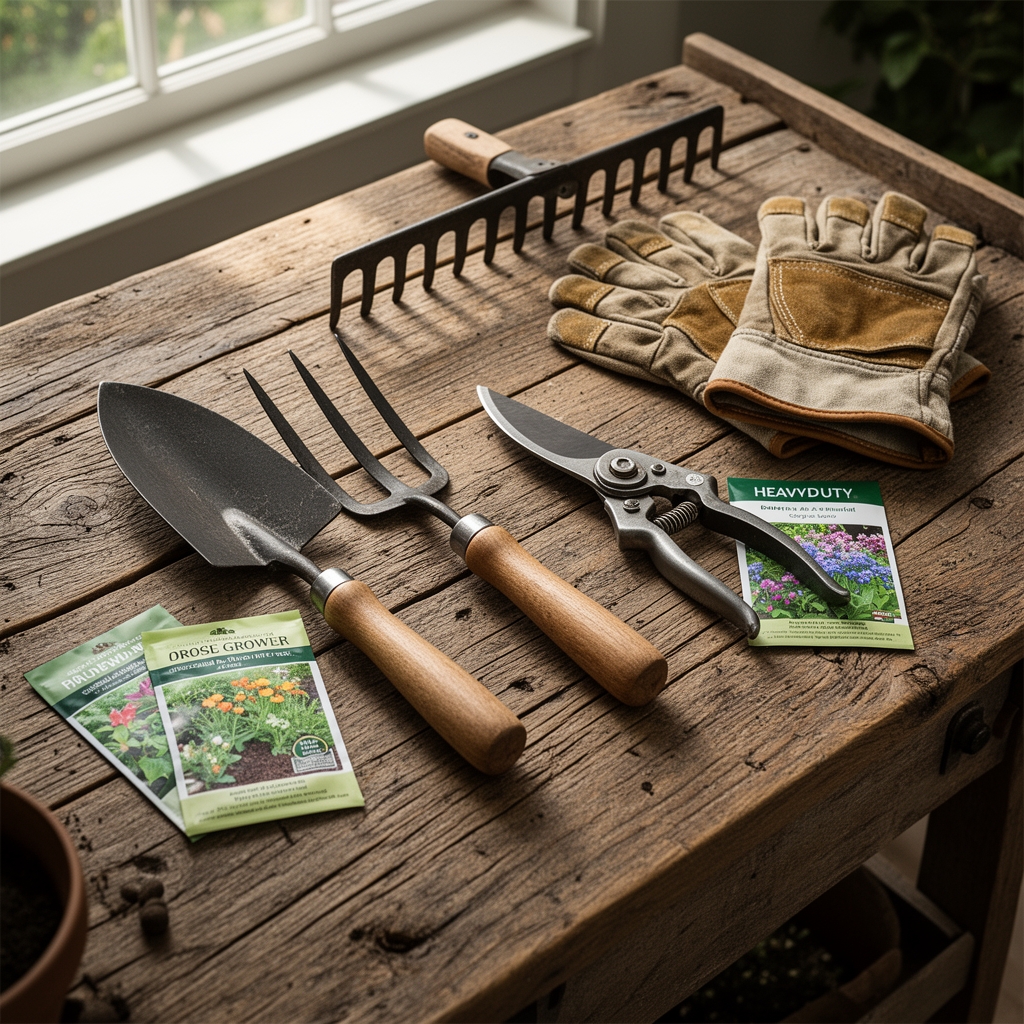
Select a bow rake (16-inch head, steel tines) for primary leveling and a leaf rake (24-inch fan, spring steel or polypropylene) for final debris removal. Soil amendments depend on baseline chemistry. For acidic soils (pH 5.0-6.0), incorporate dolomitic lime at 5 pounds per 100 square feet to raise pH incrementally. For alkaline soils (pH 7.5-8.5), add elemental sulfur at 1 pound per 100 square feet or sphagnum peat at 2 cubic feet per 100 square feet.
Balanced organic fertilizer (4-4-4 or 5-5-5) supplies nitrogen, phosphorus, and potassium in equal measure. Apply at 2 pounds per 100 square feet and rake into the top 3 inches. High-phosphorus starter blends (3-6-3) accelerate root establishment in transplant beds. Compost (1-1-1 approximate NPK) at 1-inch depth raises cation exchange capacity and buffers pH swings. Mycorrhizal inoculant powder (0.1 ounce per 10 square feet) colonizes root zones when raked into the root zone before planting.
Timing
In USDA Hardiness Zones 3-5, final bed prep begins 10-14 days after the last spring frost, when soil temperature reaches 50°F at 4-inch depth. Zones 6-7 allow raking 7-10 days post-frost at 55°F soil temperature. Zones 8-10 permit year-round prep, though summer raking in temperatures above 85°F accelerates moisture loss and requires immediate irrigation.
Fall bed prep occurs 4-6 weeks before first frost in all zones. Raking paths in autumn embeds decomposed mulch and exposes weed seeds to freeze-thaw cycles. Spring raking follows snowmelt by 3-5 days, allowing surface water to drain but preserving subsurface moisture.
Phases

Sowing Phase
Remove stones larger than 0.5 inch diameter and organic debris exceeding 1 inch length. Rake parallel to bed length in overlapping 12-inch strokes. Reverse direction perpendicular to the first pass, creating a crosshatch pattern that eliminates ruts. The final surface should show no footprints deeper than 0.25 inch.
Press the rake back (tines up) across the bed to firm the seedbed. This step collapses air pockets and ensures capillary rise of moisture to the seed zone. Broadcast seeds onto the firmed surface and rake lightly at 0.125-inch depth for small seeds (lettuce, carrot) or 0.5-inch depth for large seeds (beans, squash).
Pro-Tip: Mix fine seeds with dry sand (4:1 sand-to-seed ratio) before broadcasting. The sand adds visibility and weight, preventing clumping and wind displacement during raking.
Transplanting Phase
Rake beds to break crust 24 hours before transplanting. A 0.5-inch surface disturbance reactivates microbial activity and warms soil by exposing darker subsurface material. Create shallow furrows 0.25 inch deep along planting rows to guide root ball placement.
After setting transplants, rake soil back toward stems without burying cotyledons or true leaves. Firm soil around root balls with the rake back, applying 2-3 pounds of pressure per plant. This eliminates air gaps that dessicate feeder roots.
Pro-Tip: Drench transplant holes with diluted fish emulsion (1 tablespoon per gallon) before setting plants. The nitrogen and auxin analogs stimulate root hair proliferation within 48 hours.
Establishing Phase
Rake paths between beds to 0.5-inch depth weekly for the first month. This severs emerging weed seedlings at the hypocotyl and reduces hand-weeding by 60-70 percent. Rake direction should alternate weekly to prevent compaction grooves.
Mulch paths with 2 inches of shredded hardwood bark or straw after final raking. Rake mulch smooth to eliminate clumping and ensure even decomposition.
Pro-Tip: Rake biochar (0.5 inch layer) into path surfaces before mulching. The carbon structure adsorbs excess nutrients from bed runoff and prevents leaching into subsoil.
Troubleshooting
Symptom: Crust formation prevents seedling emergence.
Solution: Rake surface to 0.125-inch depth 5 days post-sowing. Irrigate immediately with 0.25 inch of water to resettle soil.
Symptom: Uneven germination in rows.
Solution: Raking compressed soil into furrows created air pockets. Re-rake at 0.25-inch depth and roll with a 50-pound lawn roller or tamp with a flat board.
Symptom: Weed explosion 10-14 days after prep.
Solution: Dormant weed seeds were brought to the surface. Rake shallowly (0.25 inch) to sever emerging weeds, then apply 0.5 inch of compost to suppress further germination.
Symptom: Nutrient leaching in sandy soils after heavy rain.
Solution: Rake was used too deeply, breaking capillary channels. Top-dress with 0.25 inch compost and rake lightly to incorporate without destroying soil structure.
Maintenance
Rake beds every 10-14 days during the growing season to disrupt weed germination and aerate the top 0.5 inch. Apply 1 inch of water per week via drip irrigation or soaker hose, measuring with a rain gauge. Rake granular fertilizer (5-10-5) at 1 pound per 100 square feet into the top 2 inches every 4 weeks during active growth.
Rake paths monthly to prevent compaction and maintain 2-inch mulch depth. Remove and compost spent mulch annually, then rake path surface to 1-inch depth before reapplying fresh material. Winter raking in Zones 6-10 exposes overwintering pest larvae to predators and freeze events.
FAQ
What rake tine spacing works best for fine seedbeds?
Tines spaced 0.5-0.75 inch apart create uniform tilth for seeds smaller than 2 mm. Wider spacing (1-1.5 inch) suits transplant beds and root crops.
Can I rake wet soil?
No. Soil at field capacity smears and compacts. Wait until a squeezed handful crumbles when dropped from waist height.
How deep should I rake before sowing?
0.5-1 inch maximum. Deeper raking buries organic matter and disrupts mycorrhizal networks in the root zone.
Does raking direction matter?
Yes. Raking in one direction creates micro-ridges that channel water. Cross-raking eliminates flow paths and distributes moisture evenly.
Should I rake after mulching?
Only to level clumps. Excessive raking mixes mulch into soil, reducing weed suppression and accelerating decomposition.