10 Pro Ways How to Grow Broccoli Heads
The scent of damp, mineral-rich earth signals the beginning of the brassica season. A healthy broccoli plant exhibits high turgor pressure; its leaves are turgid, waxy, and resistant to the touch. Success in learning how to grow broccoli heads depends on managing the transition from vegetative biomass to the reproductive floral cluster. This process requires precise nitrogen management and temperature control to prevent premature bolting. If the soil temperature exceeds 75 degrees Fahrenheit, the plant shifts its energy toward seed production rather than dense curd formation. Achieving a heavy, tight head requires a deep understanding of the rhizosphere and the metabolic demands of the Brassica oleracea species. You must monitor the plant daily for changes in leaf color and stem diameter. A thick, lignified stem is the foundation for a massive central head. This guide provides the technical framework necessary to maximize your yield through rigorous soil science and physiological monitoring.
Materials:

The ideal substrate for broccoli is a **friable loam** with a high organic matter content. This structure ensures adequate pore space for oxygen exchange while maintaining moisture. Broccoli is a heavy feeder that requires a **pH between 6.0 and 7.0**. If the pH drops below 6.0, molybdenum becomes unavailable, leading to “whiptail” deformity.
Your nutrient regimen must be phased. For the initial vegetative stage, use a fertilizer with an NPK ratio of 10-10-10 to build leaf surface area. As the plant approaches the reproductive stage, shift to a 5-10-10 ratio to prioritize floral development over foliage. The soil must have a high Cation Exchange Capacity (CEC) to retain essential cations like calcium and magnesium. Incorporate well-rotted compost to increase the CEC and provide a slow-release source of micronutrients. Ensure you have a calibrated soil moisture meter and a digital pH probe to maintain these parameters within the optimal range.
Timing:
Broccoli is a cool-season crop that thrives in Hardiness Zones 2 through 11, provided the planting window aligns with local temperature troughs. The biological clock of the plant is governed by the photoperiod and ambient temperature. For a spring crop, transplant seedlings 4 to 6 weeks before the last frost date. For a fall crop, which often produces sweeter heads due to sugar accumulation after a light frost, sow seeds 85 to 100 days before the first expected hard frost.
The critical window for head formation occurs when daytime temperatures remain between 60 and 70 degrees Fahrenheit. If the plant experiences a "vernalization" period where temperatures drop below 40 degrees Fahrenheit for several consecutive days while the plant is still young, it may "button." Buttoning is the premature development of a tiny, useless head. You must time your planting to ensure the plant has at least 5 to 8 true leaves before any significant temperature fluctuations occur.
Phases:

Sowing
Start seeds indoors in sterile potting media at a depth of 0.25 inches. Maintain a consistent temperature of 70 degrees Fahrenheit for germination, which typically occurs within 4 to 7 days. Once the hypocotyl emerges, provide high-intensity light for 14 to 16 hours daily to prevent leggy growth.
Pro-Tip: Monitor auxin suppression by ensuring seedlings are not crowded. High density causes plants to compete for light, leading to elongated stems that cannot support the weight of a heavy head later in the life cycle.
Transplanting
Move seedlings to the field when they reach 4 to 6 inches in height. Space plants 18 to 24 inches apart in rows spaced 36 inches apart. This spacing ensures adequate airflow, which reduces the incidence of fungal pathogens in the canopy.
Pro-Tip: Inoculate the root ball with mycorrhizal fungi during transplanting. This symbiotic relationship expands the effective root surface area, significantly increasing the uptake of phosphorus, which is vital for the transition to the reproductive phase.
Establishing
During the first three weeks post-transplant, focus on root establishment. Use a liquid seaweed extract to provide cytokinins that encourage cell division in the root zone. Avoid high-nitrogen fertilizers during this specific window to prevent excessive top-growth before the root system can support it.
Pro-Tip: Observe phototropism in your rows. If plants lean excessively, it indicates a lack of light or improper spacing. Uniform light distribution is essential for the symmetrical development of the central head.
The Clinic:
Physiological disorders in broccoli are often mistaken for pathogens. Use this diagnostic guide to identify and correct common issues.
- Symptom: Hollow Stem. The center of the main stalk is necrotic or empty.
- Solution: This is caused by rapid growth fueled by excessive nitrogen or a Boron deficiency. Reduce nitrogen application and apply a foliar spray of solubor at a rate of 1 tablespoon per gallon of water.
- Symptom: Buttoning. The plant produces a head the size of a marble.
- Solution: This results from environmental stress such as cold shock or root restriction. Ensure seedlings are never root-bound in their trays and use row covers to stabilize temperatures during early spring.
- Symptom: Tipburn. The edges of young leaves turn brown and necrotic.
- Solution: This is a calcium transport issue, often caused by inconsistent soil moisture. Maintain even moisture levels to ensure the transpiration stream consistently delivers calcium to the growing points.
- Fix-It: Nitrogen Chlorosis. If older leaves turn yellow, the plant is scavenging nitrogen for new growth. Immediately apply a high-nitrogen fish emulsion to restore leaf greening and photosynthetic capacity.
Maintenance:
Precision irrigation is the most critical factor in head density. Broccoli requires 1.5 inches of water per week delivered at the drip line. Use a soil moisture meter to ensure the root zone stays between 60% and 80% field capacity. Fluctuations in moisture cause the outer skin of the stem to toughen, which can lead to "corking."
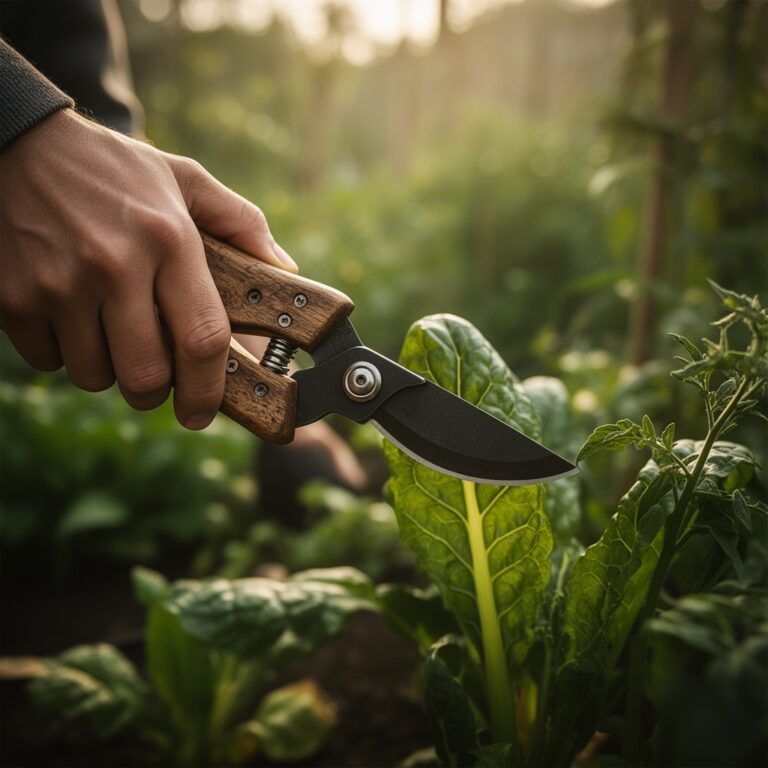
Use a hori-hori knife to remove any weeds within the root zone; broccoli has a shallow root system that does not compete well with aggressive grasses. Mulch the base of the plants with 3 inches of clean straw to regulate soil temperature and suppress weed germination. If you notice lateral branches forming early, use bypass pruners to remove them, directing all energy into the primary terminal bud. Monitor the rhizosphere for signs of soil compaction; if the soil becomes too dense, use a broadfork to gently aerate the aisles without disturbing the plant roots.
The Yield:
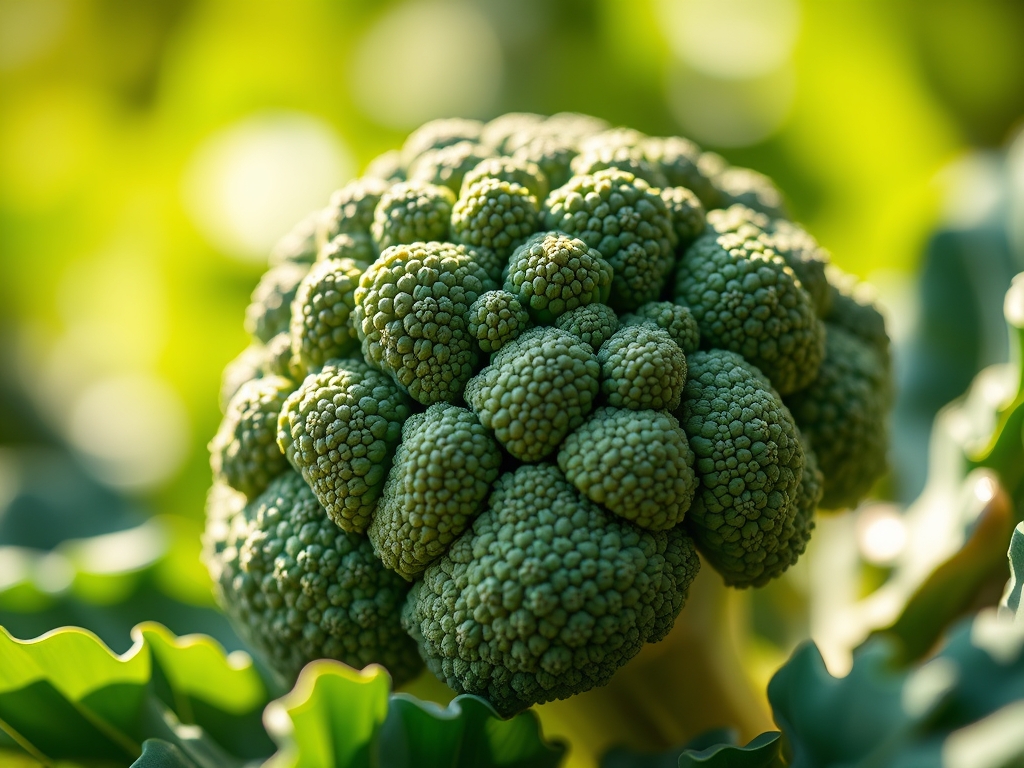
Harvesting is a matter of timing the senescence of the floral buds. You must harvest the central head while the "beads" (flower buds) are tight and before they begin to show yellow petals. A mature head should be 4 to 8 inches in diameter with a firm, domed shape.
Use a sharp knife to cut the stalk at a 45-degree angle, roughly 6 inches below the head. The slanted cut prevents water from pooling on the remaining stalk, which reduces the risk of rot. After the primary harvest, the plant will often produce smaller "side shoots" from the leaf axils. To maintain "day-one" freshness, immediately plunge the harvested heads into an ice-water bath to remove field heat. This process, known as hydro-cooling, slows the respiration rate and preserves the sugars within the tissue. Store at 32 degrees Fahrenheit with 95% humidity for a shelf life of up to 21 days.
FAQ:
Why is my broccoli head flowering so fast?
This is "bolting," caused by temperatures exceeding 75 degrees Fahrenheit or significant plant stress. High heat triggers the plant to complete its life cycle and produce seeds. Use shade cloth to lower the ambient temperature during heat spikes.
What causes small heads on broccoli?
Small heads, or "buttoning," usually result from transplant shock, nutrient deficiencies, or cold exposure in the seedling stage. Ensure consistent moisture and nitrogen levels, and avoid planting seedlings that are more than 5 weeks old.
How often should I fertilize broccoli?
Apply a balanced fertilizer at planting, then side-dress with a nitrogen-rich amendment three weeks after transplanting. A final application of phosphorus-heavy fertilizer should be applied just as the central head begins to form in the terminal bud.
Can broccoli grow in partial shade?
Broccoli requires at least 6 hours of direct sunlight to produce large, dense heads. While the plant can grow in partial shade, the heads will be smaller, less dense, and the stalks will be significantly thinner.